
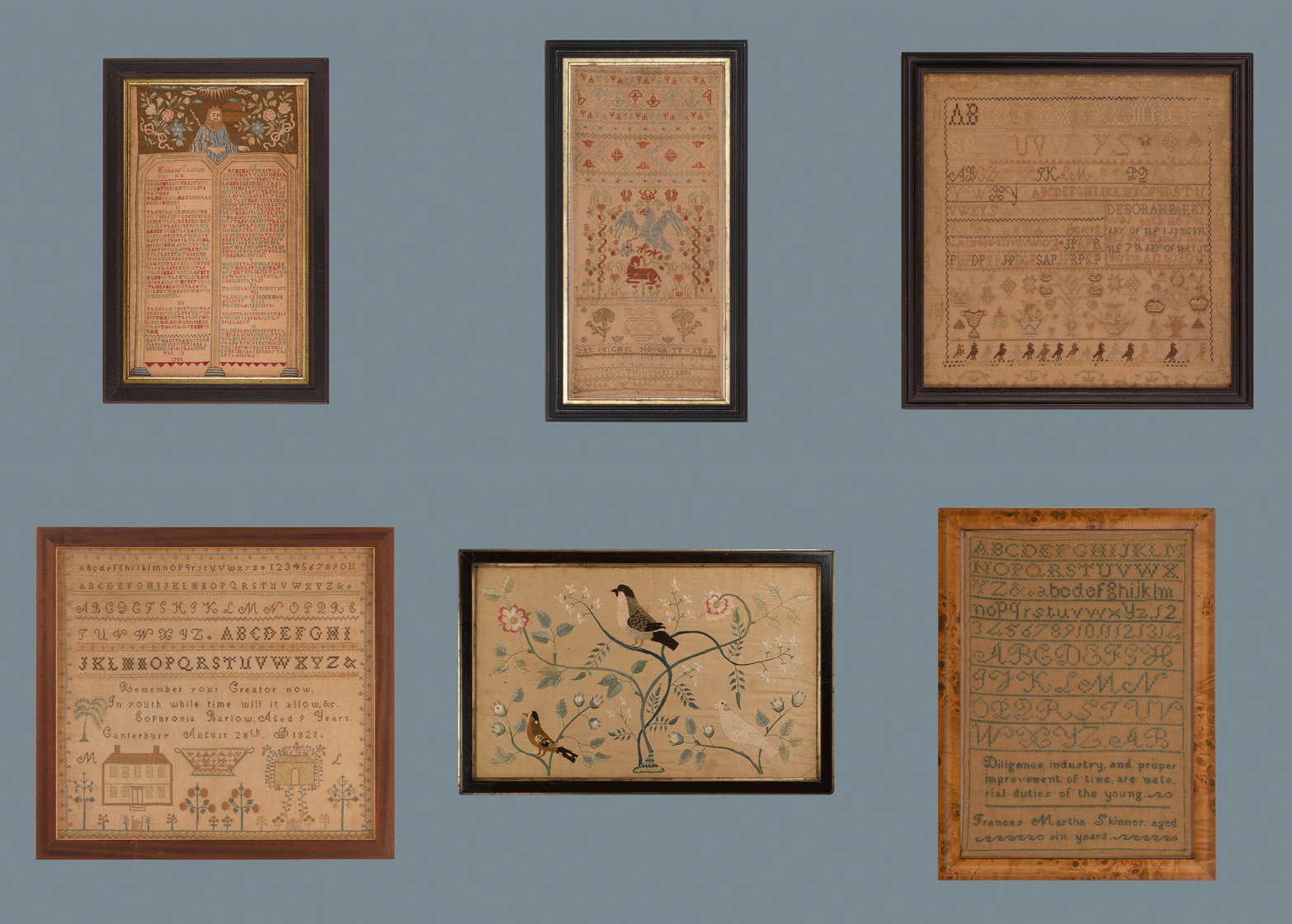
18 antique samplers just added to our site!
To always stay in the loop about our site's
inventory updates, sampler related events
and articles, make sure you're subscribed
to our email list here!
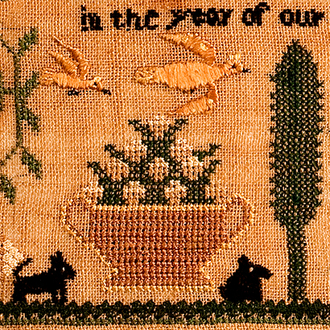
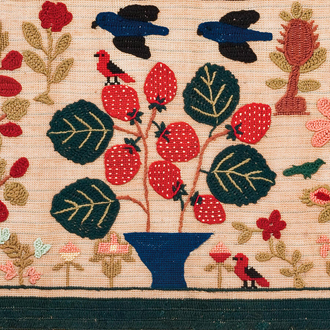
American Folk Art Museum’s exhibition, opening on 10/9,
will shine a light on the often-overlooked creative production of girls and young women in the 18th and 19th centuries and their sustained engagement with representations of place,
identity, and community.
Bringing together nearly 100 works from more than two dozen institutions and private collections across the United States and Canada, Locating Girlhood: Place and Identity in Early American “Schoolgirl” Art offers one of the most significant explorations of early American girls’ artistic achievement ever assembled.
Here are several pages of the preview article, a full page in the New York Times, 9/13, Sunday Arts & Design Section.
To read the entire article, go to the NYT website.

The Young Women at the Heart of American Landscape Art
Once dismissed as exercises in dainty femininity, the handiwork of schoolgirls is now celebrated for anticipating the art of the Hudson River School and beyond.
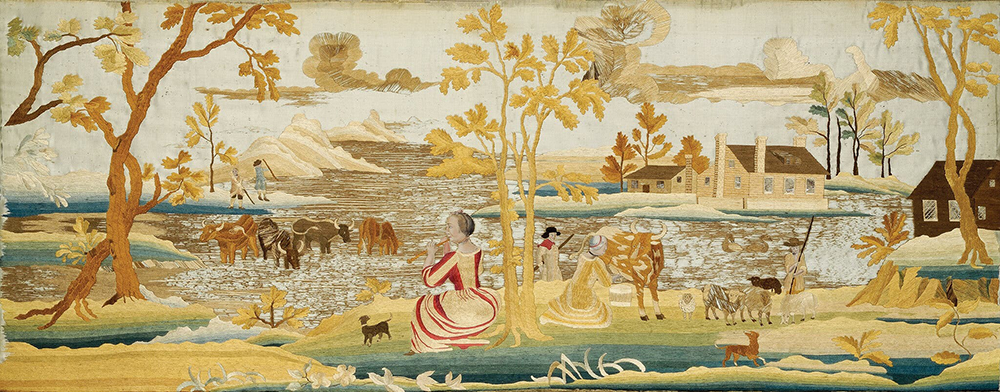
A needlepoint Connecticut scene attributed to Faith Trumbull (1743-1775). Her early oil paintings and needlework hung in the family parlor, inspiring her younger brother, John Trumbull, to become the famous “Painter of the Revolution.” Credit: American Folk Art Museum
By Celia McGee
Sept. 9, 2026
In the traditional origin narrative of culture in the United States, a proud young country’s distinctive asset — its untamed natural beauty — propelled its artists into the Great Outdoors.
Thomas Cole’s 19th-century romantic landscapes clear-cut a path for the Hudson River School and the grandiose canvases of Frederic Church and Albert Bierstadt. They would be followed by the quieter mood of Impressionism, and Abstract Expressionism’s exchange of natural scenery for human nature’s turbulent inner life. Overwhelmingly, the artists were white and male.
But what if the story didn’t begin with them, and instead with earlier female artists who identified — and identified with — the matter of American place from within a different, domestic sphere?
That question animates “Locating Girlhood: Place and Identity in Early American ‘Schoolgirl’ Art,” an exhibition opening Oct. 9 at the American Folk Art Museum in Manhattan. It recalibrates the history of art in the United States by opening up its timeline to acknowledge young female creators, including young women of color who — whether enslaved, bound to service, or schooled in sewing in free Black communities — “raise the question of whose stories got told and whose didn’t,” said Emelie Gevalt, the museum’s deputy director and the show’s co-curator. (read more at The New York Times)
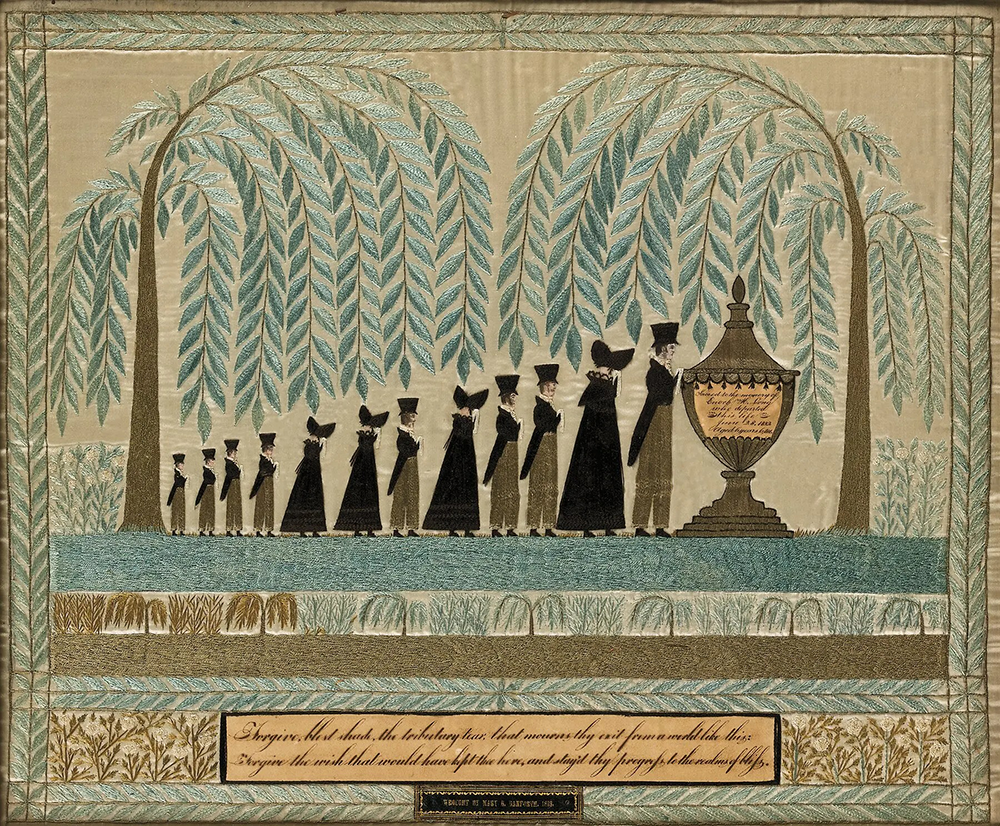
Mary B. Danforth (1807–1848), “Memorial to Enoch H. Long,” probably Manchester, Massachusetts, 1823. Silk and watercolor on silk, ink on paper, gold on leather. Credit: American Folk Art Museum